
Dk 3.48 ± 0.05 · UL 94V-0 · imaging, monitoring, diagnostic, and therapeutic equipment — why medical electronics standardize on RO4350B.
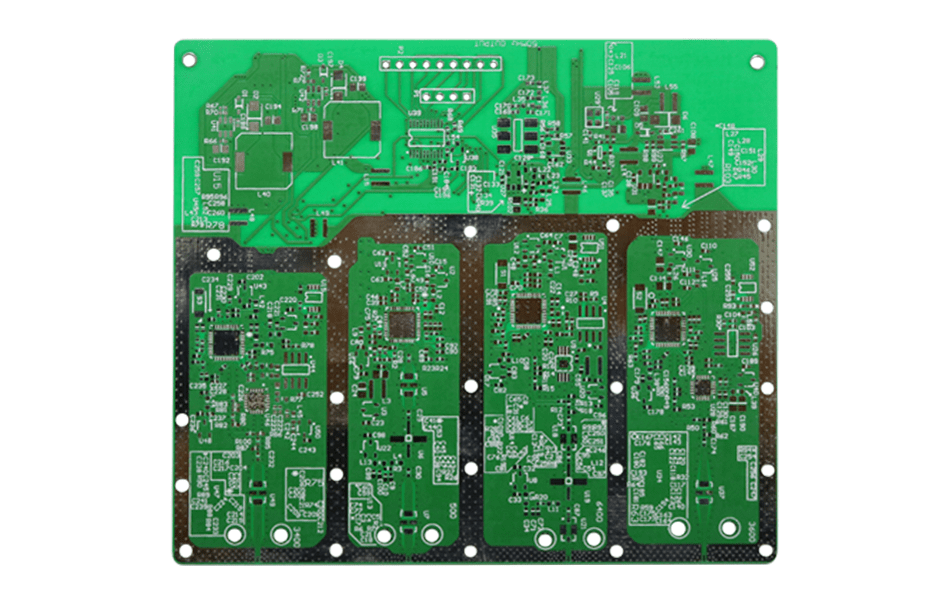
RO4350B in Medical Electronics: The Short Answer
Bottom line up front: Rogers RO4350B is a hydrocarbon/ceramic laminate with a tightly controlled dielectric constant of 3.48 ± 0.05, low loss (Df 0.0037 at 10 GHz), low CTE, and a UL 94V-0 fire rating — a combination that fits medical device requirements precisely: signal accuracy, long-term reliability, and safety compliance. It processes with standard FR-4 workflows, which keeps medical builds cost-effective.
This article covers the material’s properties, where it is used across medical equipment, and the design challenges it helps solve.
Material Properties That Matter for Medical Devices
As medical technology advances, accuracy and reliability requirements keep rising. In devices handling high-speed data and signal transmission, the laminate is not a commodity — it defines what the electronics can deliver:
| Property | Value | What it means for medical designs |
|---|---|---|
| Dielectric constant (Dk) | 3.48 ± 0.05 | Precise control of signal transmission speed |
| Dissipation factor (Df) | 0.0037 @ 10 GHz | Low signal loss during transmission |
| Coefficient of thermal expansion (CTE) | Low | Maintains stability and long-term reliability |
| Flammability | UL 94V-0 | Meets stringent medical equipment safety requirements |
The tight Dk tolerance is the standout for medical work: predictable signal speed means imaging and measurement electronics behave consistently from unit to unit — a prerequisite for regulatory-grade reproducibility.
Where RO4350B Is Used in Medical Equipment
Four equipment classes rely on high-frequency PCBs built on RO4350B:
| Equipment class | Examples | Why RF performance matters |
|---|---|---|
| Imaging | MRI and CT scanners | Process large data volumes and high-speed signals |
| Monitoring | Cardiac monitors, EEG machines | Real-time, accurate transmission of vital-sign data |
| Diagnostic | Ultrasound equipment | High-frequency signal processing for clear images |
| Therapeutic | Surgical, radiological, laser therapy systems | Highly accurate operating procedures |
Across all four, the common thread is high-frequency signal processing where distortion, delay, or interference directly affects clinical outcomes.
Design Challenges RO4350B Helps Solve
Three challenges dominate high-frequency medical PCB design:
- Signal integrity: ensure signals arrive without distortion or interference — RO4350B’s low Df and controlled Dk keep transmission clean.
- Electromagnetic compatibility (EMC): medical devices must neither interfere with other equipment nor fall victim to external electromagnetic interference — a controlled dielectric makes impedance and shielding design predictable.
- Thermal management: high-frequency operation generates heat; low CTE and stable thermal behavior keep the device from overheating and the stackup dimensionally stable over its service life.
Manufacturing Considerations at XCE PCB
RO4350B’s biggest practical advantage is process compatibility: it laminates and drills with standard FR-4 processes — no PTFE-specific chemistry — which shortens lead times and keeps medical builds cost-effective without giving up RF performance.
XCE PCB manufactures RO4350B boards from 2 to 72 layers with impedance held to ±10% and prototypes in as fast as 24 hours to IPC-A-600G criteria. We stock many Rogers series laminates year-round.
Conclusion
RO4350B earns its place in medical device design through controlled electricals (Dk 3.48 ± 0.05, Df 0.0037), mechanical stability (low CTE), safety compliance (UL 94V-0), and cost-effective FR-4-compatible processing. It supports imaging, monitoring, diagnostic, and therapeutic equipment where signal accuracy is clinical, not just technical. If you are designing medical electronics, send us your stackup — our engineers will review it and quote with the process plan attached.
Frequently Asked Questions
What is the dielectric constant of Rogers RO4350B?
Is RO4350B a PTFE material?
Why does UL 94V-0 matter for medical PCBs?
Which medical equipment uses RO4350B?
Can you prototype medical PCBs on RO4350B quickly?
Designing Medical Electronics on RO4350B?
Send us your Gerber files and requirements for a manufacturability review and a tailored quotation.
sales1@xcepcb.com
+86 180 3818 8537