
Dk 2.20 · Df 0.0009 · moisture <0.02% · microwave to millimeter-wave — nine properties that make RT/duroid® 5880 the RF benchmark.
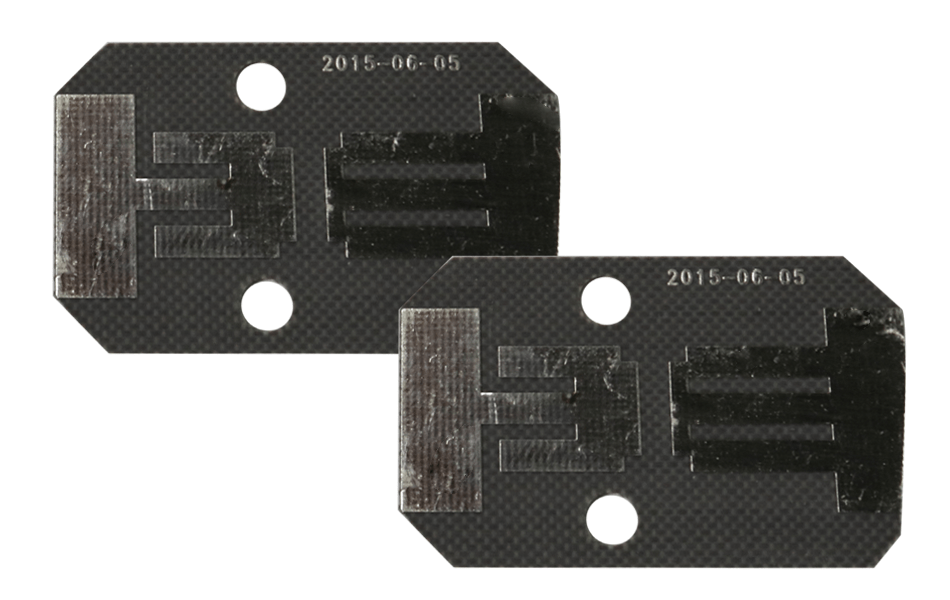
RT/duroid® 5880: The Short Answer
Bottom line up front: Rogers RT/duroid® 5880 is a PTFE glass-microfiber laminate defined by four numbers: Dk ~2.20, Df ~0.0009, moisture absorption under 0.02%, and stable performance from microwave to millimeter-wave frequencies (10 GHz and beyond). It is the material behind satellite communication, radar systems, high-frequency sensors, microstrip and stripline circuits, and millimeter-wave designs.
Below are the nine main properties that make it a premium choice for RF and microwave circuits.
1–2: Dielectric Constant Stability and Low Loss
Dk ~2.20, stable across frequency. The low, stable dielectric constant reduces signal delay and maintains phase consistency — the foundation for precise impedance control and matching in high-frequency designs.
Df ~0.0009. An extremely low dissipation factor means minimal energy loss during transmission. This enhances overall system efficiency and is particularly beneficial where signal integrity and low attenuation are paramount — high-speed data links and high-frequency communication.
| Property | Value | Design benefit |
|---|---|---|
| Dielectric constant (Dk) | ~2.20, stable at high frequency | Precise impedance control and matching |
| Dissipation factor (Df) | ~0.0009 | Minimal transmission loss, high system efficiency |
| Moisture absorption | < 0.02% | Stable electricals in humid or changing climates |
| CTE | Low, similar to copper | Multilayer reliability; less delamination risk |
| Construction | PTFE + glass microfiber reinforcement | Mechanical strength with flexibility |
| Frequency range | Microwave to millimeter-wave, 10 GHz+ | Precision RF and high-speed communication |
| Compliance | RoHS, REACH, lead-free compatible | Meets strict sustainability requirements |
3–4: Moisture Resistance and Thermal Stability
Moisture absorption under 0.02%. Electrical properties stay stable in humid or changing environments — the reason 5880 remains reliable in maritime and military communication devices exposed to harsh climates.
Low CTE, similar to copper. Dimensional stability through temperature variations matters twice: it preserves electrical performance, and a CTE matched to copper reduces delamination and thermal-stress failures in multilayer structures.
5–6: Mechanical Properties and Ease of Processing
Strength and flexibility. The PTFE composite reinforced with glass microfibers provides high mechanical strength while remaining easy to shape — well suited to stripline and microstrip structures, and stable under vibration and physical impact.
Workable in production. Despite premium performance, 5880 drills and cuts predictably, reducing manufacturing defects. Compatibility with traditional PCB processes keeps production cost-effective — provided your fabricator runs PTFE-tuned desmear and lamination parameters.
7–8: Chemical Resistance and Frequency Range
Chemical resistance. Excellent resistance to common solvents, etchants, and cleaning agents keeps the material unaffected through manufacturing and long-term use.
Wide frequency range. 5880 performs from microwave into millimeter-wave frequencies — routinely used above 10 GHz — which is why precision RF sensors and high-speed communication devices standardize on it.
9: Environmental Compliance
RT/duroid® 5880 supports lead-free soldering and is free of harmful substances, complying with RoHS and REACH — required for markets with strict sustainability and environmental safety standards.
Where These Properties Pay Off
The property set maps directly onto applications: microstrip and stripline circuits exploit the stable Dk; millimeter-wave builds exploit the low Df; military radar and guidance systems exploit the moisture resistance and thermal stability together. Nothing in the list is exotic — the value is that all nine properties hold at once.
XCE PCB manufactures RT/duroid® 5880 boards from 2 to 72 layers, panels up to 600×1200 mm, with impedance held to ±10% and prototypes in as fast as 24 hours.
Conclusion
RT/duroid® 5880 stands out because its properties reinforce each other: low stable Dk for impedance control, near-zero Df for efficiency, minimal moisture uptake for environmental reliability, and copper-like CTE for multilayer durability. If you are specifying 5880, send us your stackup and frequency band — our engineers will confirm manufacturability and quote with the process plan attached.
Frequently Asked Questions
What are the key properties of Rogers RT/duroid 5880?
How much does RT/duroid 5880 absorb moisture?
Is RT/duroid 5880 suitable for millimeter-wave designs?
Does RT/duroid 5880 work in multilayer boards?
Is 5880 compliant with environmental regulations?
Specifying RT/duroid® 5880?
Send us your Gerber files and requirements for a manufacturability review and a tailored quotation.
sales1@xcepcb.com
+86 180 3341 4657